
May 23, 2026
Industrial Rigging and Moving: Protecting Your Assets and Your Bottom Line
Successful industrial rigging and moving starts with acknowledging a hard truth: a single miscalculation during a machinery relocation can cost you more in downtime and equipment damage than the entire project budget. When you hire machinery moving services, you aren’t just paying for a lift; you are paying to mitigate the catastrophic risks of production delays, OSHA violations, and asset destruction.
What machinery moving services include:
| Service | What It Means for Your Facility |
|---|---|
| Rigging & Lifting | Controlled lifting and positioning of heavy equipment using gantries, cranes, forklifts, and engineered lift plans. |
| Disassembly & Reassembly | Match-marked teardown, transport preparation, and precision reinstallation aligned to OEM specifications. |
| Transportation | Permitted heavy-haul trucking with route planning, escorts, and Northeast logistics coordination. |
| Precision Leveling | Laser-aligned machine placement to protect production accuracy, calibration, and long-term equipment lifespan. |
| Storage & Crating | Secure interim warehousing, industrial crating, and moisture-protected storage during phased relocations. |
| Project Management | Dedicated coordination across contractors, schedules, transportation, safety planning, and facility timelines. |
One wrong lift. One miscalculated route. One contractor who isn’t certified for the load. Any of these can turn a two-day move into a two-week shutdown. This guide provides a practical roadmap for managing industrial relocation without compromising your bottom line.
Key Takeaways for Facility Managers
- Safety compliance is the primary driver of project success and liability reduction.
- Detailed site surveys are mandatory to prevent “hidden” logistical delays and structural issues.
- Turnkey services reduce the administrative burden of managing multiple contractors.
- Precision leveling and alignment are as critical as the physical move itself for machine longevity.
- 24/7 emergency response capabilities are essential for minimizing production gaps in time-sensitive industries.
The Strategic Importance of Professional Machinery Moving Services
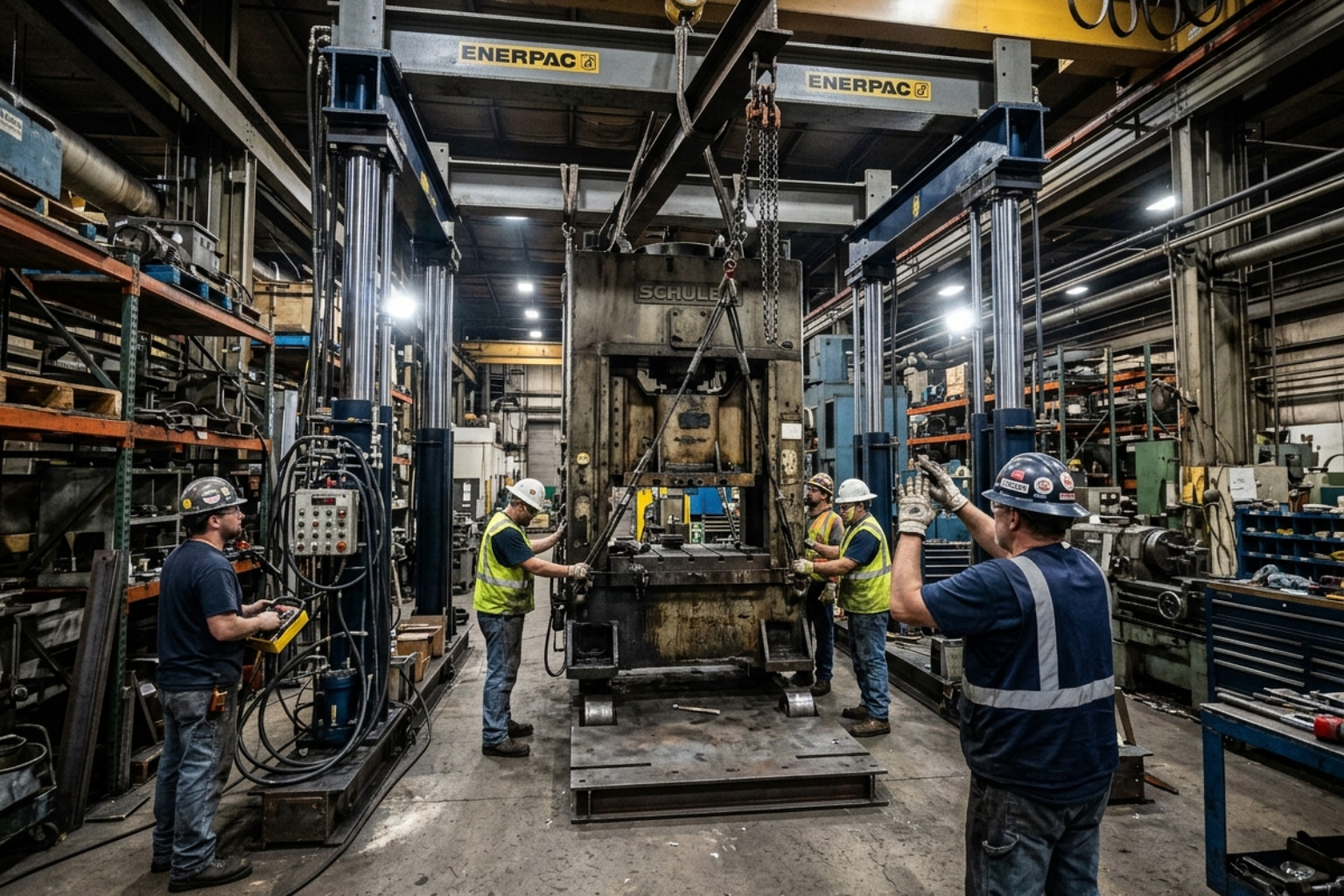
In the industrial landscape of New England, moving a machine isn’t a “pick up and drop off” job. It’s an engineering challenge. Professional machinery moving services provide the expertise required to handle assets weighing tens of thousands of pounds without compromising floor load capacities or structural integrity.
When evaluating a vendor, look for a comprehensive rigging strategy that accounts for center-of-gravity calculations and overhead clearances. Whether it’s a heavy equipment move for a warehouse or a complex plant relocation, the goal is a seamless transition with zero accidents.
Avoiding Costly Mistakes in Machinery Moving Services
The “low bid” contractor is often the most expensive mistake a facility manager can make. We’ve seen the results: undersized forklifts, no formal lift plan, and common mistakes like dropped loads or damaged epoxy floors that halt production for weeks. Avoiding these risks requires a partner who treats your equipment with the same precision as the technicians who built it.
Essential Tools for Heavy Relocation
- Hydraulic Gantries: For heavy lifting where overhead cranes cannot reach; capacities up to 900 tons.
- Versa-Lifts: Heavy-duty forklifts with telescoping frames for massive weights in tight aisles.
- Air Skates: Floating multi-ton machines on a thin film of air to protect sensitive floors.
- Laser-Tracking Metrology: Ensuring alignment to within microns of required position.
The Real-World Process of Industrial Relocation
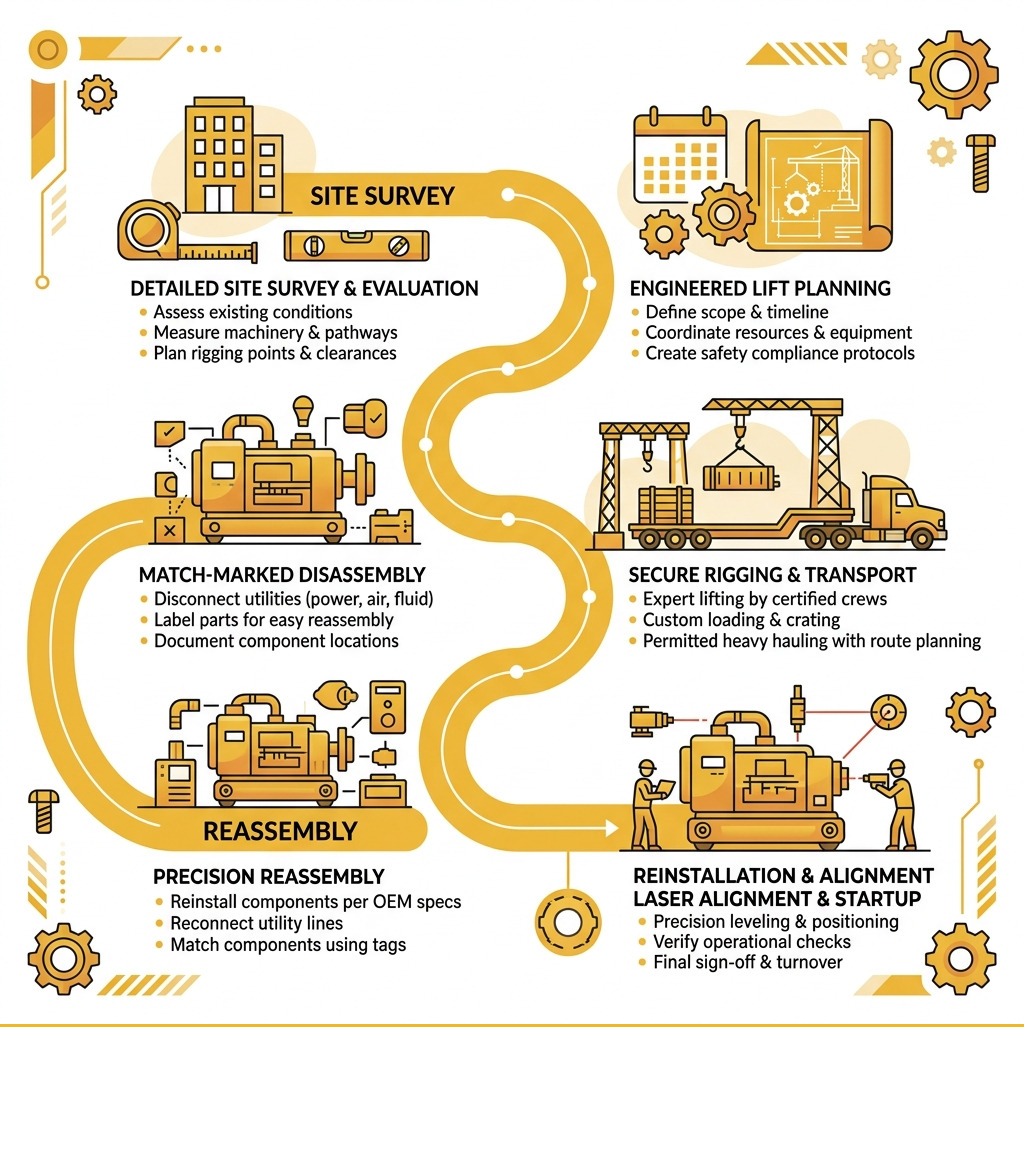
A successful move is 80% planning and 20% execution. In New England facilities, where space is often at a premium, the process must be methodical:
- Site Survey: Measuring doorways, checking floor thicknesses, and identifying utility disconnect points.
- Risk Assessment: Identifying hazards like live power lines and pedestrian traffic in a written safety plan.
- Dismantling & Match Marking: Ensuring every wire, pipe, and bracket returns to its exact spot during reassembly.
- Rigging & Extraction: Securing the machine to skates or a gantry for careful maneuverability.
Understanding how long rigging projects take is vital for your production schedule. A single machine might take half a day, while a full millwright service for an entire plant could span weeks of phased work.
Precision Installation and Reassembly
What a millwright does during installation determines if that machine runs for twenty years or fails in six months. This includes precision leveling to prevent internal stress and seismic anchoring to meet Massachusetts and New Hampshire building codes. Furthermore, trucking services for heavy machinery require specialized permits and route surveys to ensure clearance of low bridges and weight-restricted overpasses.
Critical Risks and Safety Standards in Heavy Rigging
Safety isn’t a checkbox; it’s your primary defense against project failure. Reputable movers adhere to strict OSHA compliance and industry standards.
Real-World Consequences of Poor Planning:
- Equipment Damage: Torquing a machine frame during a lift can ruin its precision permanently.
- Safety Violations: Improper rigging gear leads to catastrophic failures and heavy fines.
- Increased Costs: “Hidden” logistical delays often double the initial quote.
Following heavy equipment moving safety tips—like using spotters and verified lift plans—is non-negotiable. For phased moves, warehouse services allow for “just-in-time” delivery, keeping your facility productive while the new site is prepped.
How to Prepare Your Facility for a Successful Move
Preparation keeps costs down and schedules on track. Before the rigging crew arrives:
- Clear the Path: Ensure all aisles are free of pallets and debris.
- Verify Clearances: Double-check that the machine fits through the door while sitting on its skates.
- Utility Prep: Have your electrical and mechanical contractors “air gap” all lines.
- Floor Protection: Ensure the team is prepared with plywood or specialized protection for sensitive floors.
For a deeper dive, review our guide on how to prepare your facility. When choosing industrial rigging services, evaluate their project history and insurance coverage. Understanding rigging services cost in Massachusetts requires looking at weight, dimensions, and environmental complexity (e.g., clean-room vs. standard machine shop).
Frequently Asked Questions about Industrial Moving
How much does machinery moving cost?
Pricing is highly variable. A single machine move might range from a few thousand dollars, while a large-scale plant relocation can reach six or seven figures. The best way to get an accurate number is to request a site survey and a customized quote.
What is the difference between a general mover and a machinery rigger?
A general mover is great for crates and pallets. A machinery rigger is an industrial specialist who understands structural engineering, load dynamics, and mechanical systems. Riggers have the specialized insurance and equipment (like 50,000-lb capacity forklifts) that general movers lack.
How do you handle international machinery shipping?
International moves require “export crating.” This involves building heat-treated wood crates and using vacuum-sealed barrier bags with desiccant to prevent salt-air corrosion during sea transit. We also coordinate with customs brokers to ensure all documentation is compliant.
Conclusion
Atlantic Millwrights provides the engineering expertise and 24/7 service required to keep your facility productive. With an accident-free record and a focus on minimizing downtime, we handle the complexities of industrial relocation so you can focus on your operations. If you need a partner who prioritizes safety and precision over shortcuts, explore our rigging services to see how we can support your next move.